A penetration is a junction where cables, pipes and other utilities cross a fire barrier — a wall, partition or floor. Penetrations are often the weakest point of a fire-protection system: through an unsealed junction, fire, smoke and hot gases pass into the adjacent fire compartment within minutes. To choose the right solution, let’s first look at the types of junctions found in construction and the strengths and weaknesses of each approach, and then at how STABITERM addresses these tasks.
Part 1. Types of penetration junctions in construction
By barrier location
- Through walls and partitions — a vertical barrier; the fill works mainly against fire and smoke. + easier installation and inspection; − hard to ensure tightness across the whole section with many cables.
- Through floors (slabs) — a horizontal barrier: the fill carries its own weight and must resist burn-through from below. + reliable separation between storeys; − harder to execute, higher demands on the load-bearing capacity of the junction.
By junction contents
- A single cable or pipe — a simple junction, easily sealed, minimal cost.
- Cable bundles, trays and trunking — complex geometry and air gaps; more reliable routing, but tightness and inspection are harder.
- Metal pipes — conduct heat, so heat transfer through the junction must be considered.
- Plastic pipes — melt in a fire and leave an open section, so intumescent elements that close the opening are required.
- Transit and combined junctions — the most difficult to seal.
By fill construction
- Dry demountable junctions (modular blocks, pillows). + fast installation, easy inspection, adding cables, reuse; − sized for standard sections, require careful installation.
- Wet fills (mortar and plaster compounds). + monolithic, strong, durable, suit any section; − need time to gain strength, less convenient for frequent re-routing.
- Elastic joint sealing (including expansion joints). + works on moving junctions, impermeable to smoke and gas; − for joints and gaps, does not replace volumetric filling of large openings.
By required fire-resistance limit
Penetration junctions are classified by fire-resistance limit. The higher the requirement for the barrier, the greater the volume and quality of fill the junction needs. The specific limit for each barrier is set by the project documentation of the facility.
Part 2. What STABITERM offers for these tasks
Each junction type has its own solution from the STABITERM range:
- Wet volumetric filling — STABITERM 008 sealing compound: strong, does not shrink, lasts for decades.
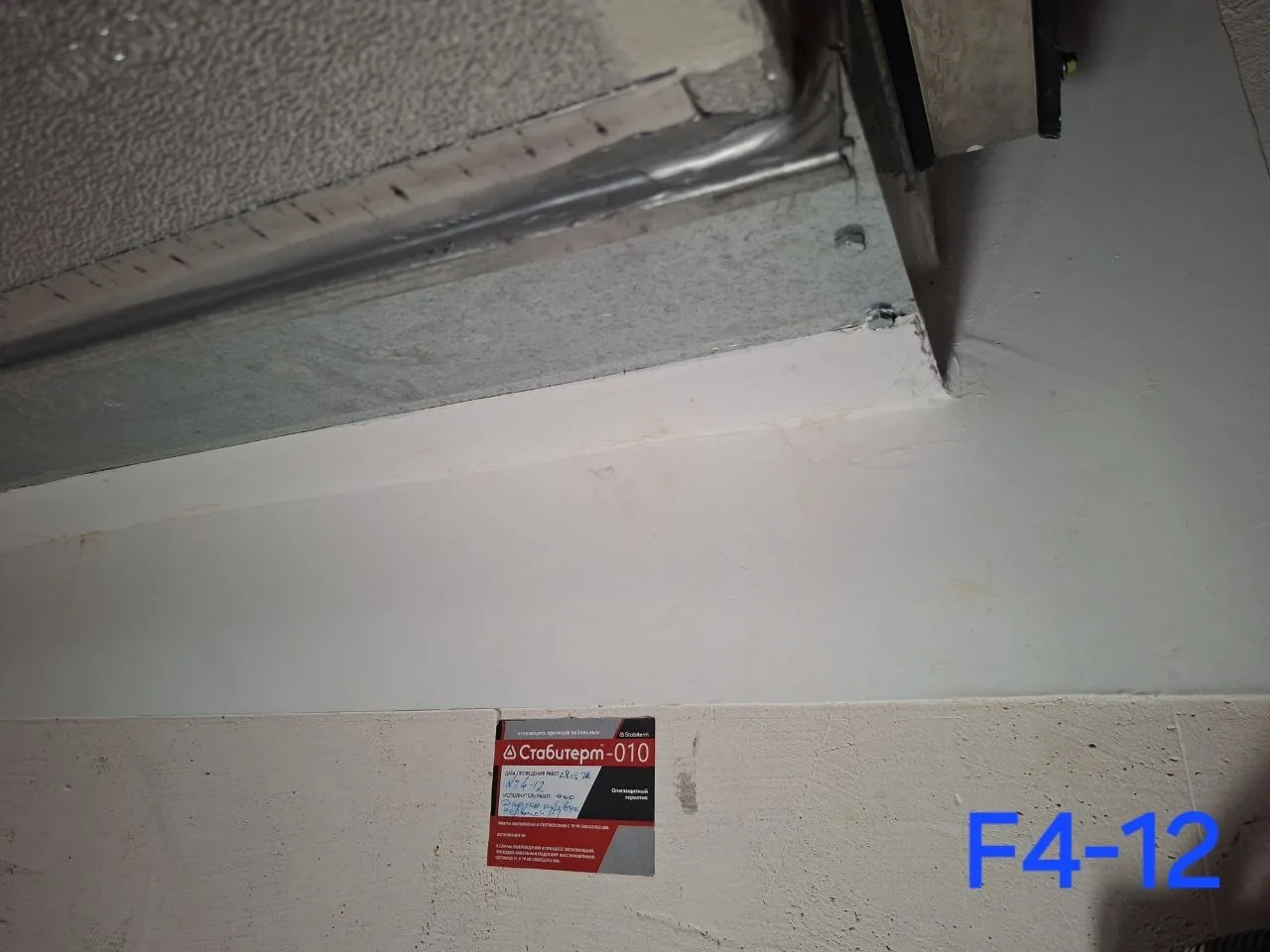
- Joints and expansion joints — STABITERM 010 fire-resistant sealant: elastic, fast to apply, impermeable to smoke and gas.
- Dry demountable penetrations — STABITERM 021 fire barrier block.
- Cable protection on the approach to the junction — STABITERM 300 mesh and STABITERM 225 paint.
In practice the solutions are combined: the volume of the opening is closed with a compound or block, while joints and abutments are sealed. We select the materials, calculate consumption and the required fire-resistance limit for each specific junction.
Examples on site

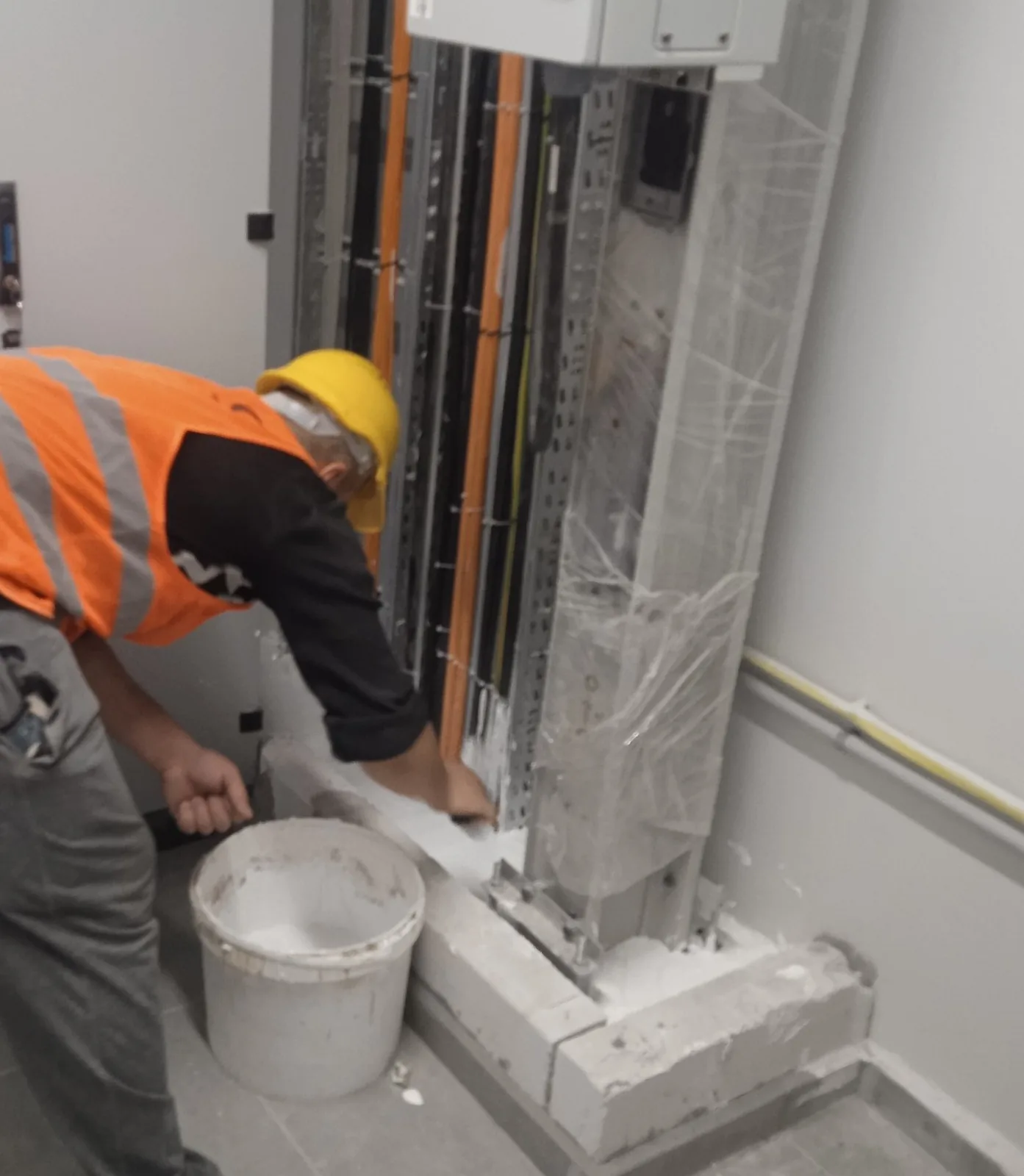
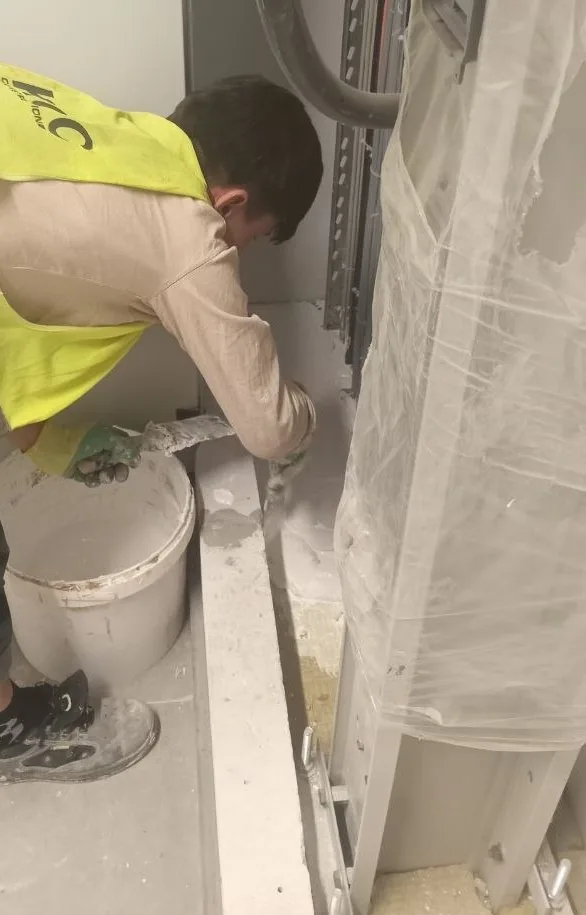
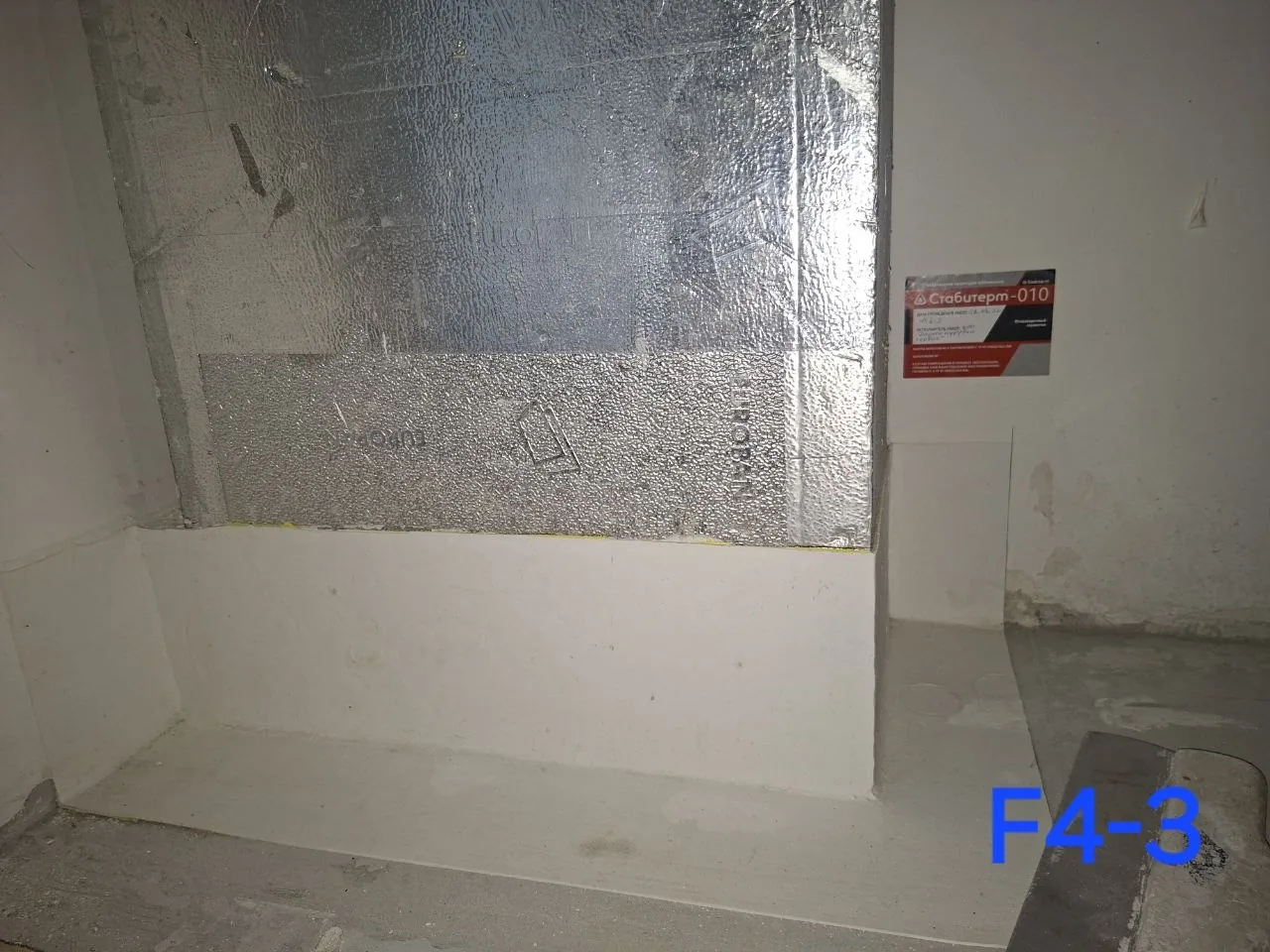
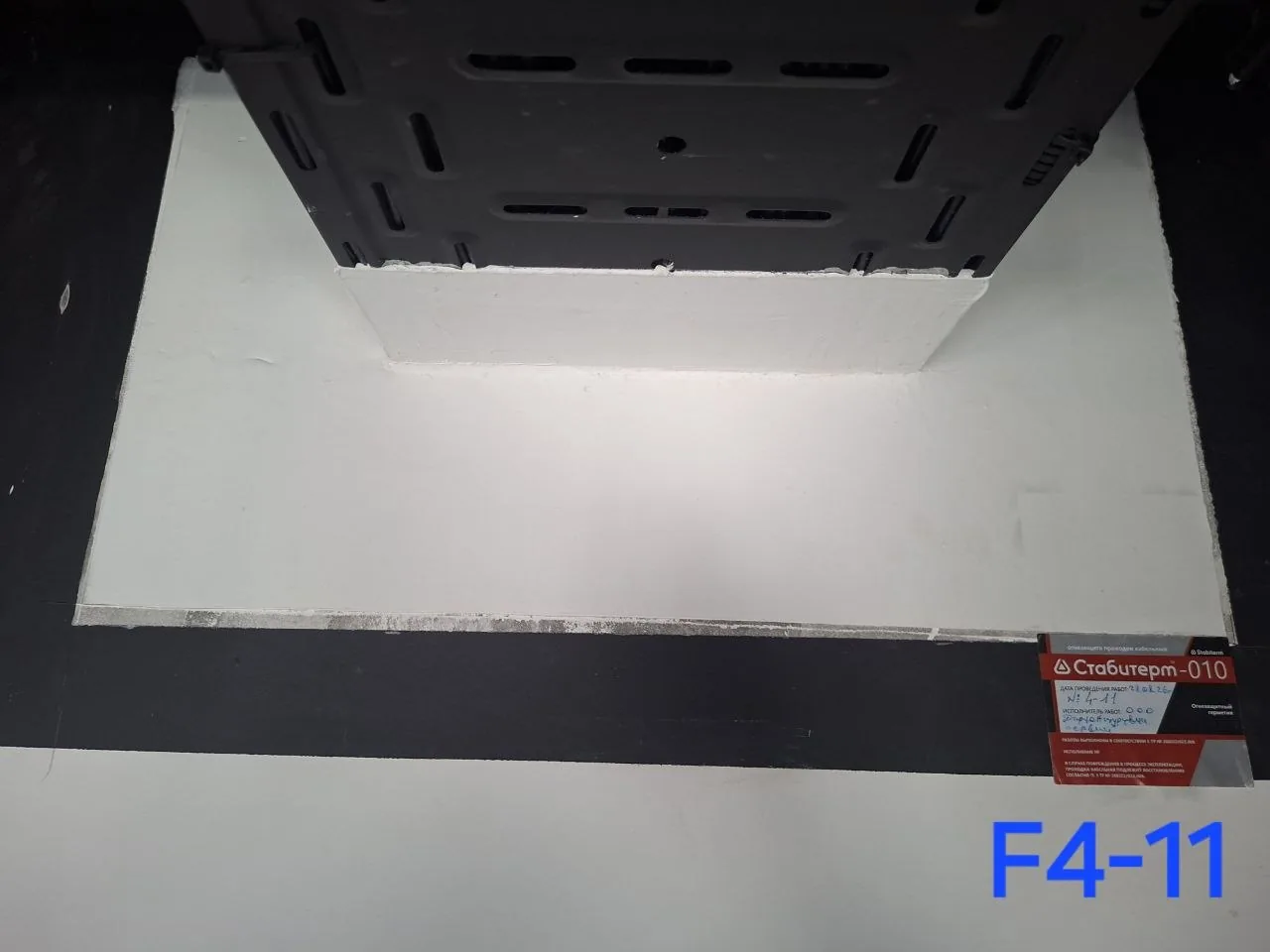
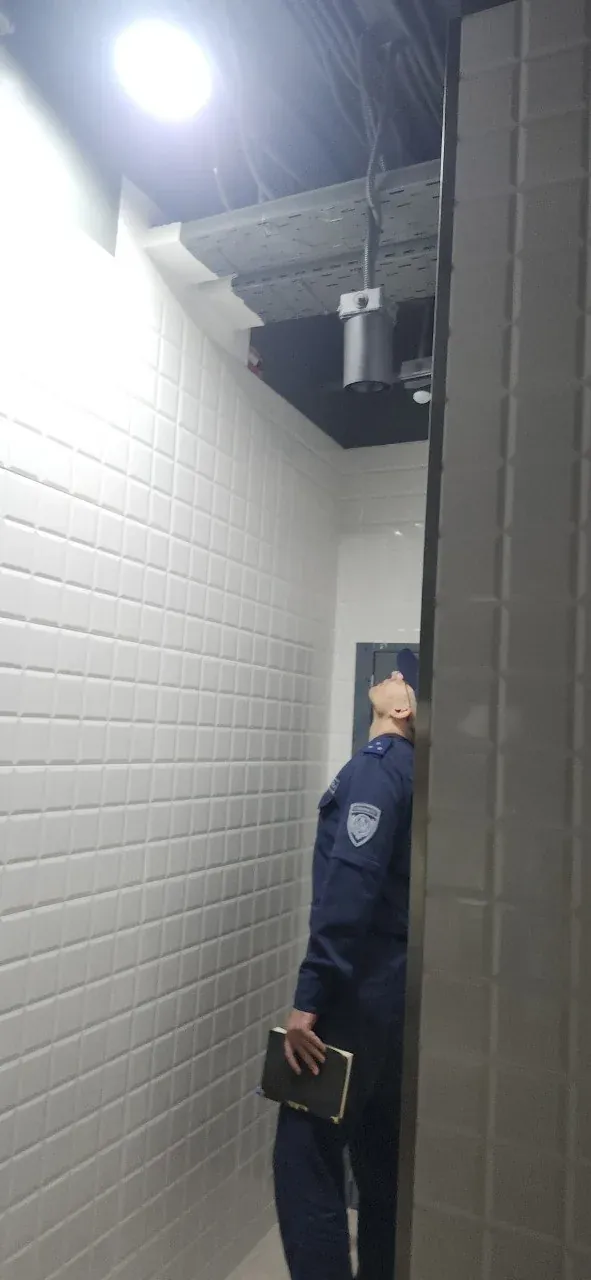
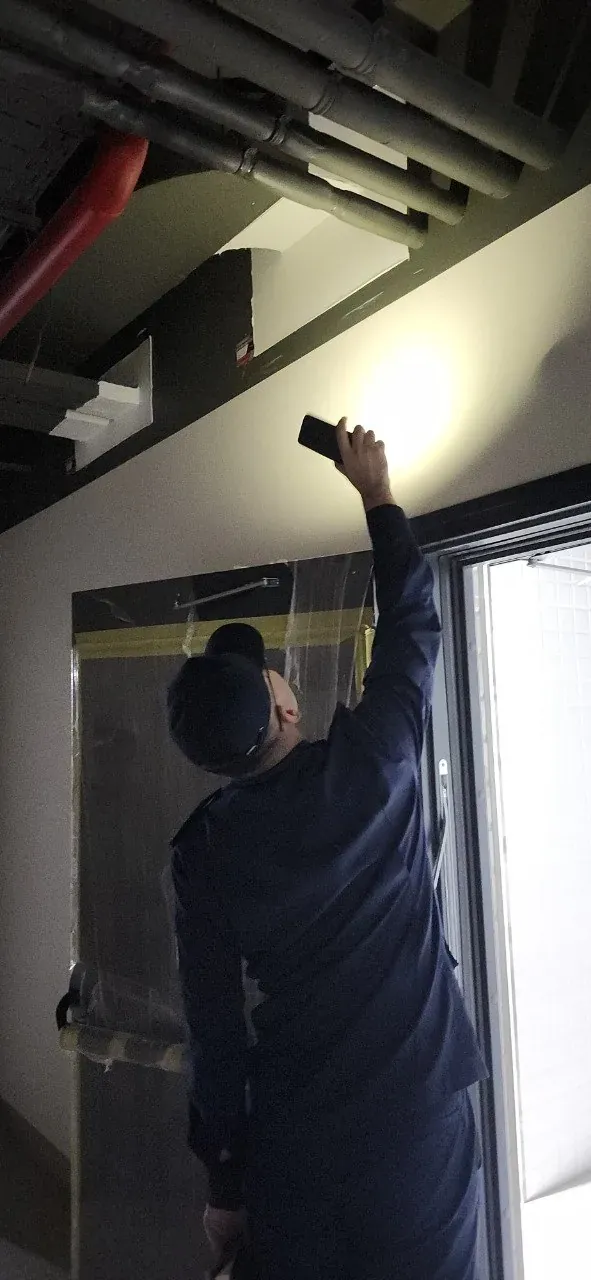
Acceptance of penetrations on site
Finished penetration seals are checked by an inspector of the Ministry of Emergency Situations at building handover: the filling of openings and the sealing of joints and edges around cable trays and pipes.
Besides the seals themselves, the inspector checks the documents for the materials used:
- fire safety certificate of the Ministry of Emergency Situations of the Republic of Uzbekistan;
- certificate of conformity;
- quality passport for the batch;
- hidden works certificates;
- production date and shelf life of the sealant and other materials used;
- batch number of the material;
- compliance of the coating thickness with the required fire-resistance rating.
That is why we prepare the documents for the material in advance — together with the delivery.
Why STABITERM
- Complete range of materials for the fire protection of penetrations and cables in one place.
- Materials in stock in Tashkent — next-day delivery to cities across the republic.
- Many years of STABITERM use on projects in Uzbekistan: proven effectiveness and long service life at operating facilities.
- Supply and technical support in Tashkent and across Uzbekistan.
- Coating selection, consumption calculation and a technical information package for your facility.
Frequently asked questions
How do you seal a cable penetration in a wall?
The opening is filled with STABITERM 008 sealing compound or a STABITERM 021 fire barrier block, and joints and edges are sealed with STABITERM 010 fire-resistant sealant. The exact solution depends on the size of the opening and the required fire-resistance rating.
What is the difference between a block and a sealing compound?
A block is a dry, removable seal: convenient where cables need to be added or replaced and inspected. A sealing compound gives a monolithic seal for an opening of any section.
Can a new cable be pulled through the seal later?
Yes. STABITERM 008 sealing compound can be removed to lay new cables and then restored, while the STABITERM 021 block is designed from the start to be taken apart and refitted.
Need to seal cable or utility penetrations at your facility? Leave a request — we will select materials for each junction and calculate consumption →
Fire protection of cable lines, trays and racks: Cable fire protection in Tashkent and Uzbekistan →